Beyond the Horror Movies: The Real Biology and Behavior of Piranhas
Researchers have debunked common cinematic myths about piranhas, revealing their diverse diets, unique dental structure, and actual behavior in the wild.
 🎭Culture & Sport
Photo: UNIAN
Key points
- Over 60 piranha species inhabit South American river systems
- Their diets frequently consist of plants, fruits, and carrion alongside fish
- Bite force and dental replacement mechanisms are among the most unique in fish
For decades, popular culture has portrayed piranhas as ruthless monsters capable of tearing apart any living creature in seconds. However, modern zoological research presents a completely different picture of these serrasalmid fish, which comprise over 60 distinct species. In their natural South American habitats, these fish act as ordinary members of river ecosystems with remarkably diverse dietary habits.
Anatomical Records and Feeding Habits
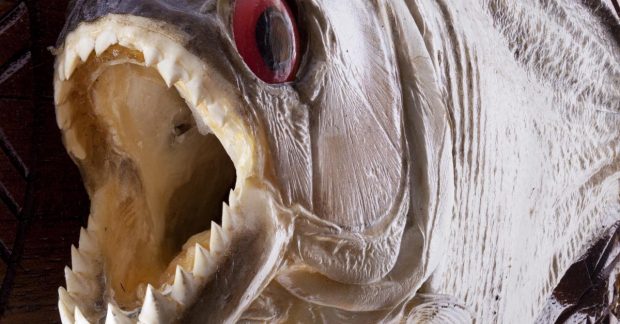
The defining feature of these aquatic animals is their unique triangular teeth, which interlock like scissor blades when the jaws snap shut. Notably, piranhas replace their teeth in entire blocks, growing new dental plates directly underneath the old ones. Special attention goes to the black piranha, whose relative bite force exceeds that of an American alligator based on body mass comparisons.
Despite their ferocious reputation, many piranha species do not specialize in hunting large live prey. Their diets frequently include carrion, small crustaceans, insects, seeds, fruits, and aquatic vegetation. Certain populations have shifted almost entirely to herbivorous diets, while others have adapted to nipping scales and fins from living fish without killing them.
Social Life and Human Interaction
Red-bellied piranhas typically travel in schools ranging from 20 to 100 individuals. This social structure helps them defend against major natural predators, such as caimans, river dolphins, and large birds. Mass attacks on large animals happen rarely and are usually triggered by extreme hunger or severe stress during dry seasons when water levels drop significantly.
For urban residents, questions regarding exotic fauna most often relate to the responsibilities of keeping home aquariums. Instances where owners irresponsibly release pets into natural water bodies abroad can create ecological risks for local species. Nevertheless, within their native range, the risk of unprovoked attacks on humans remains extremely low when basic precautions are observed.
Source UNIAN — unian.ua/curiosities/piranji-chim-harchuyutsya-ci-ribi-ta-naskilki-… ↗
Read next
 🛡️Security
Rosstat statistics: over 92% of Russian army losses are combat-related
A leaked database from the Russian state statistics service reveals that the vast majority of deaths among Russian military personnel since 2022 are directly linked to co…
 🏙️City
Zelenskyy warns of new attacks: call for vigilance across Ukraine
President Zelenskyy announced intelligence reports of upcoming Russian strikes and urged international partners to strengthen Ukraine's air defense.
 🛡️Security
Aviation Boost: Ukraine Expects Arrival of Gripen Fighters
President Volodymyr Zelensky announced the delivery of Swedish-made Gripen fighters starting in January. Efforts to counter Russian drone threats remain a top security pr…
 👥Society
Weather alert: Zhmerynka residents warned of icy conditions and a sharp temperature drop
On November 24, an active southern cyclone will hit Ukraine, bringing snow, ice, and gusty winds. Forecasters have issued a Level 1 weather warning.
 🩺Health
Health Ministry expects sufficient flu vaccine supplies in Ukrainian pharmacies
The Ministry of Health assures that despite supply delays, the country has received enough doses to protect against seasonal influenza.
 🛡️Security
Zelenskyy announces strengthened defense against Russian jet drones
President Volodymyr Zelenskyy held a Staff meeting focused on countering Russian jet-powered drones and increasing the production of domestic interception capabilities.