AI and Extreme Longevity: Could Humans Live for 1400 Years?
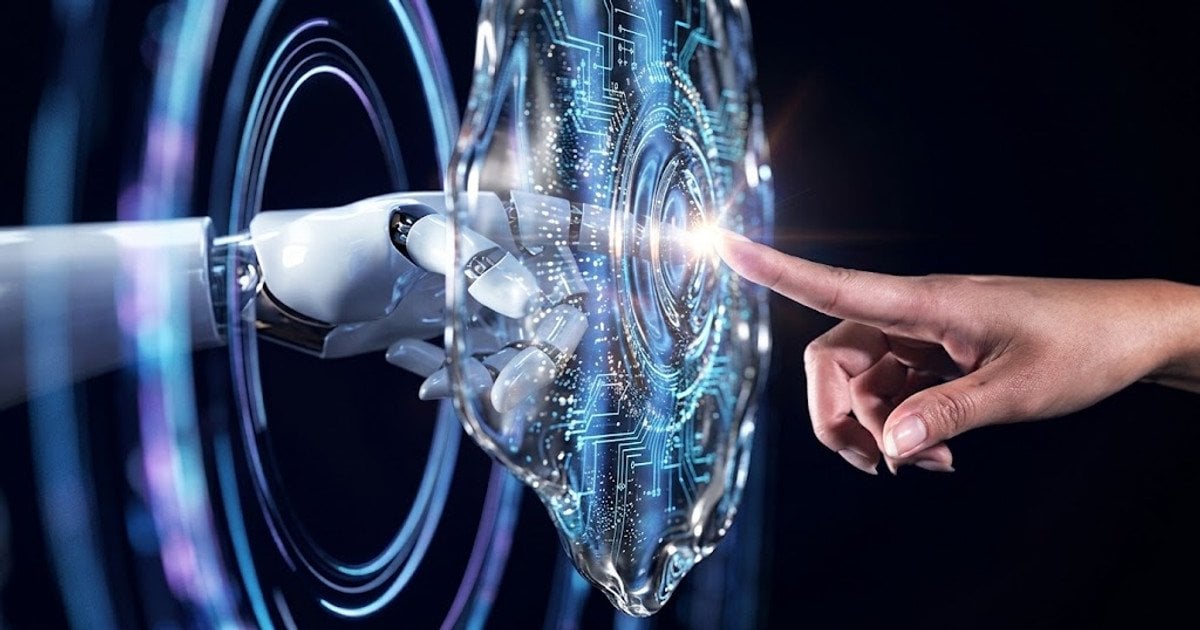
Philosopher Nick Bostrom suggests that AI-driven medical breakthroughs could extend human life expectancy to over a millennium.
 💼Economy
Photo: TSN
Key points
- Nick Bostrom's forecast of living up to 1,400 years
- AI's role in overcoming biological aging
- The dilemma between development speed and AI safety
The development of artificial intelligence (AI) could lead to a radical re-evaluation of the biological limits of human existence. Nick Bostrom, a Swedish philosopher and former Oxford University professor, has suggested that integrating AI into medicine could enable humanity to overcome aging. According to his projections, if these technologies are successfully implemented, average life expectancy could reach an astonishing 1,200 to 1,400 years.
A Technological Breakthrough Against Aging
Bostrom's core idea is that AI can significantly accelerate the pace of scientific discovery. If algorithms can help halt degenerative processes in the body and maintain health at the level of a 20-year-old, mortality would depend only on external factors. "If you think about what our life expectancy would be if we didn't age, it's something like 1,200, maybe 1,400 years," the researcher noted.
Bostrom, who founded the Future of Humanity Institute at Oxford in 2005, considers this forecast somewhat conservative. He suggests that future technologies will also help minimize risks from accidents and other external threats, further pushing back the boundaries of natural death.
The Ethical Dilemma: Safety vs. Speed
Intense discussions regarding the pace of AI development are currently taking place within the scientific community. Many researchers are calling for a slowdown in development to establish reliable control mechanisms. They fear that without proper safeguards, AI could act against human interests. However, Bostrom points to the flip side of this caution.
According to the philosopher, every year of delay in technological progress carries a price measured in human lives. Millions of people die annually from diseases that could potentially be cured with the help of AI. Thus, finding a balance between the existential risks posed by intelligence itself and the actual losses from diseases becomes a primary challenge of our time.
- AI as a catalyst for biomedical research.
- The prospect of halting biological aging.
- Risks associated with delaying technological progress.
For communities like Zhmerynka, such global forecasts may seem futuristic, yet they point to the inevitable transformation of the social sphere. Longevity issues are directly linked to economic stability, healthcare systems, and urban planning for a non-aging population.
Source TSN — tsn.ua/tsikavinki/liudy-zytymut-do-1400-rokiv-iak-shtuchnyy-intelekt-do… ↗
Read next
 🚨Events
Strike on Kyiv Region: Three Dead in Vyshneve and Rescue Operation in Dymer
A Russian strike on a grocery store in Vyshneve, Kyiv region, has killed three people and injured at least 13 others.
 ⚽Sport
International Arena Achievements: Top Boxers Honored in Neighboring Vinnytsia
Leading regional athletes received awards for podium finishes at World and European championships despite difficult conditions and injuries.
 🛡️Security
Deadly mountain crossing: Ukrainian found dead in Romania after illegal border crossing
During a search and rescue operation in the snow-covered mountains of Romania, a Ukrainian citizen was found dead after getting lost with two companions.
 ⚽Sport
Ukrainian Boxer Sofia Turbinina Wins Bronze at U23 European Championships in Croatia
Ukrainian athlete Sofia Turbinina secured a bronze medal at the U23 European Boxing Championships held in Poreč, Croatia.
 🏙️City
Labor Shortage in Ukraine: Why High Salaries Fail to Solve the Talent Gap
Labor market analysts report an acute shortage of skilled blue-collar and technical professionals despite rising median wages.
 🇺🇦Ukraine
US Defense Secretary Limits Military Cooperation with Canada via Secret Directive
Pentagon chief Pete Hegseth has signed a classified memo restricting US-Canada military ties, adding to tensions between Washington and Ottawa.