Can Ground Robotic Systems Fully Replace Armored Vehicles on the Frontline: Manufacturers' Views
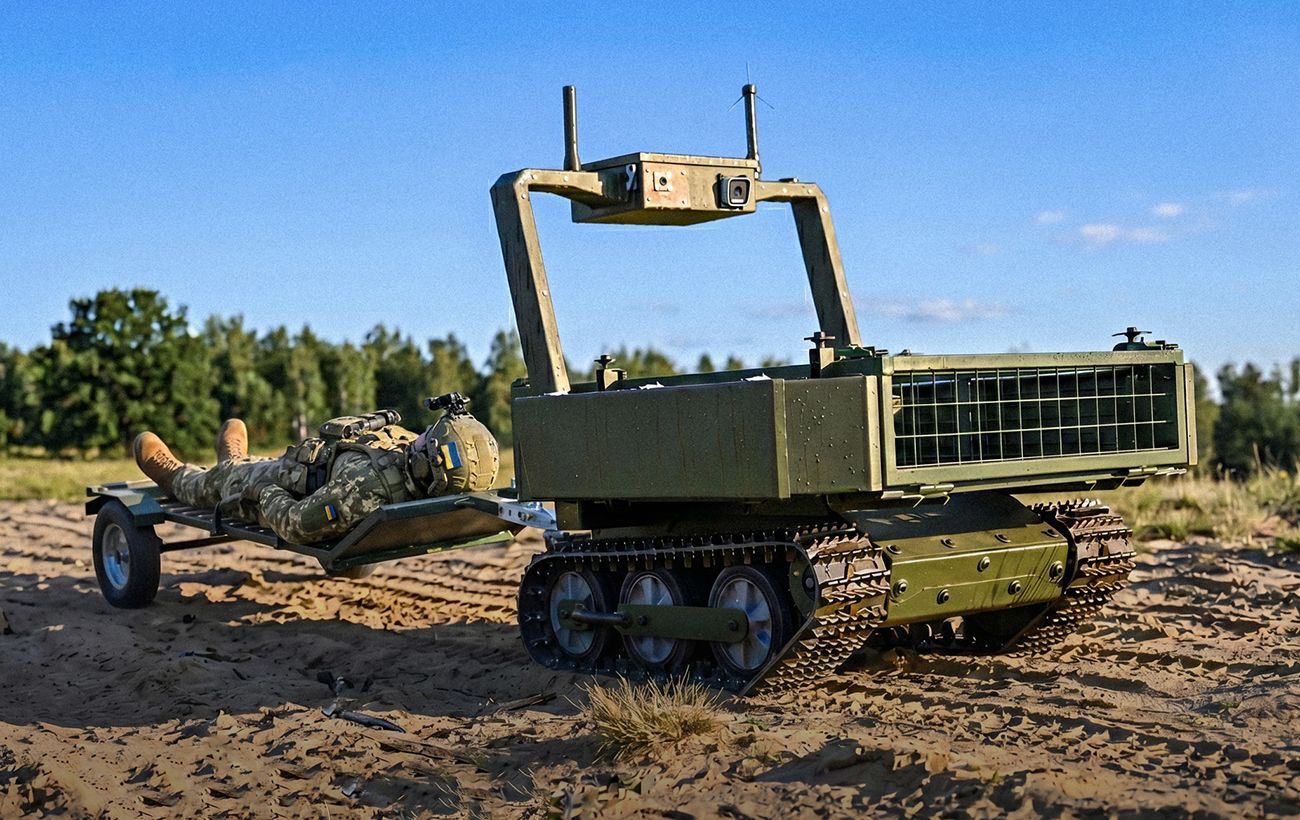
Ukrainian developers of ground robotic systems note that robots should not be viewed as a replacement for armored vehicles, as they perform different tasks, though a significant redistribution of logistical functions is expected.
 🚨Events
Photo: RBC-Ukraine
Key points
- Ground robots will redistribute tasks rather than replace armored vehicles.
- Frontline logistics could largely transition to robots by 2027.
- Retrofitting standard vehicles into unmanned systems is often economically impractical.
The development of unmanned technologies on the frontline is gaining momentum, yet a complete replacement of classical armored vehicles is not on the horizon. Near the line of contact, ground robotic complexes (GRCs) are taking over an increasing share of tasks, but their primary role is to optimize high-risk processes rather than replace personnel-carrying vehicles or pickups.
New Roles for Machinery on the Frontline
According to Ratel Robotics CEO Taras Ostapchuk, the discussion centers around redistributing responsibilities rather than completely substituting vehicles. Ground platforms are actively involved in logistical operations in sectors where crew movement poses high risks. The expert estimates that by 2027, the majority of frontline logistics could be handled remotely.
Nevertheless, armored vehicles and specialized heavy machinery retain their critical importance. They are necessary for troop transportation, protected transit, and operations along routes requiring speed and armor protection. Additionally, the question of converting regular vehicles and APCs into unmanned systems remains a subject of ongoing discussion among engineers.
Economics and Feasibility of Modernization
As noted by the CEO of TechUnity, technically converting a serial pickup or armored personnel carrier into an unmanned system is feasible. However, such modernization requires integrating complex electronics, safety systems, and remote control capabilities. Economically, it is often simpler and more cost-effective to design a specialized GRC from scratch rather than retrofit existing bulky machinery.
Despite these challenges, the market continues to evolve. International manufacturers introduce modular GRCs based on proven automotive tech, while Ukrainian engineers develop modular robotic complexes designed for aerial deployment. Such technological solutions demonstrate the adaptability of the defense sector.
Source RBC-Ukraine — rbc.ua/ukr/news/nrk-mozhut-zaminiti-broneavtomobili-fronti-17954241… ↗
Read next
 🎓Education
Baltic vector of Ukrainian operations: expert evaluates new capabilities and potential targets
Recent drone attacks in the Baltic region indicate an expansion of operational geography and growing capabilities. According to experts, Primorsk could become the next st…
 🎓Education
Metro across Southern Bridge in Kyiv: District Administration Gives Forecast on Resuming Traffic
Capital residents and visitors will have to wait longer for the restoration of the green metro line connection across the Southern Bridge.
 🎓Education
How to Reduce Washing Machine Power Consumption: Expert Advice
The State Agency on Energy Efficiency and Energy Saving of Ukraine has published recommendations on optimizing household washing machines to save resources.
 🎓Education
Kyiv's Dynamo Coaching Staff Strengthened with Two Foreign Specialists
Acting head coach of the capital's club Maciej Kendzorek has brought in new assistants from North Macedonia and Poland.
 🎭Culture & Sport
Known Ukrainian actor speaks out on financial struggles and lowest rank at Ivan Franko Theatre
Popular Ukrainian actor Roman Yasinovskyi has opened up about his earnings at the Ivan Franko National Theatre. Despite his extensive film and stage experience, he holds …
 🏛️Politics
Ukraine’s EU Integration Path: Why the Quality of State Reforms Hinders Progress
The European Commission's latest report on Ukraine highlights systemic implementation issues, where formal lawmaking often lacks realistic enforcement mechanisms.